The computing world is in a constant state of evolution, driven by higher processing demands, cloud-native architectures, and the exponential growth of data. AMD—Advanced Micro Devices—has consistently been at the forefront of this transformation, constantly innovating its processor designs. The upcoming AMD Venice CPU architecture appears poised to shape the future of server computing, promising enhancements in performance, energy efficiency, and workload handling tailored for next-generation data centers.
TL;DR (Too long, didn’t read)
The upcoming AMD Venice CPU architecture is designed specifically for modern server needs. With improved core density, energy efficiency, and support for emerging technologies like AI virtualization and edge processing, Venice could define the next standard for cloud and enterprise servers. AMD’s architectural improvements are built to support distributed computing, scale-out systems, and eco-friendly data centers. It’s a forward-looking platform designed for the workloads of the future.
The Vision Behind AMD Venice
AMD’s development of the Venice CPU reflects a clear strategy: to enhance performance while addressing the growing complexity of modern server workloads. As organizations shift toward microservices, AI inference, and real-time data analytics, older architectures struggle to keep pace. Venice aims to fill this gap by offering enhanced parallelism, faster interconnects, and software-friendly design.
Key objectives of the AMD Venice CPU include:
- Scalability across a wide range of deployments from edge nodes to large-scale cloud data centers
- Optimized power efficiency for environmentally sustainable computing
- Improved core architecture with enhanced per-core performance
- Dedicated capabilities for AI and machine learning inference
Venice isn’t just a generational step-up; it’s a reimagining of AMD’s core server strategy.
Architecture Refinement and Innovative Design
AMD has made its name by refining chiplet-based design, and Venice continues this trend by incorporating a modular layout that allows customization and flexibility. With high core counts and advanced simultaneous multithreading (SMT), Venice chips offer excellent performance density—an essential feature for hyperscale environments.
Additionally, Venice features enhanced memory bandwidth, support for DDR5, and PCIe Gen 5.0, ensuring that these CPUs can support I/O-heavy workloads with ease. These design choices make Venice particularly well-suited to data-intensive applications such as genomic analysis, large-scale simulations, and real-time fraud detection.
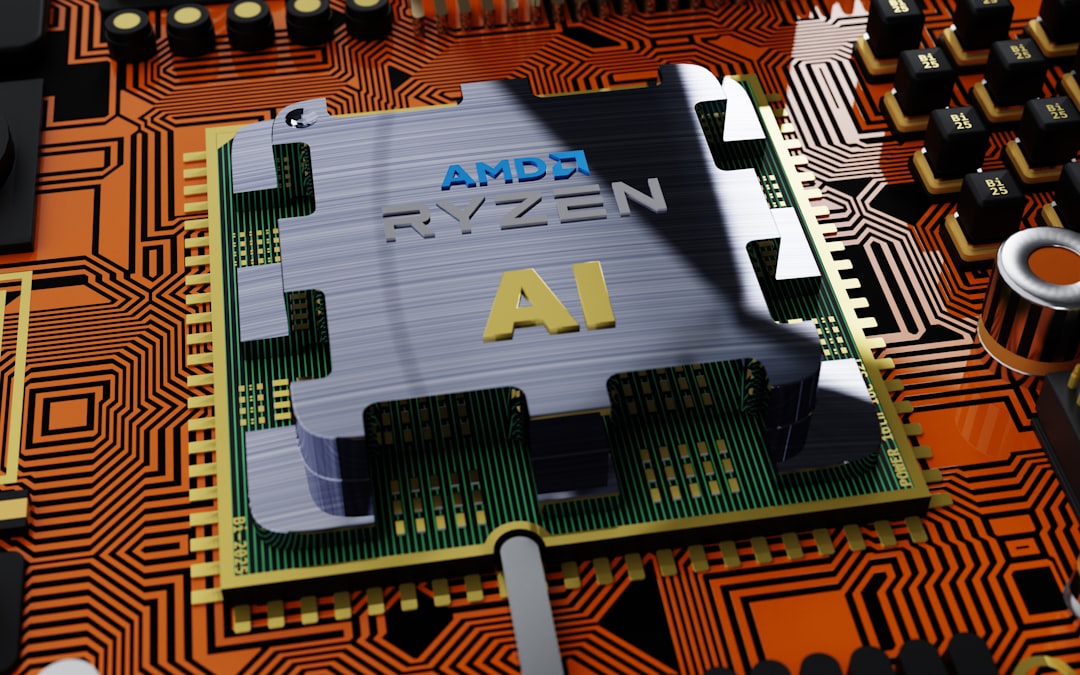
Another notable advancement is AMD’s use of 3D stacking technology in Venice, allowing better vertical integration of components. This leads to lower latency and better thermal characteristics as crucial components are placed closer together for optimal performance.
Energy Efficiency and Thermal Innovations
As global data centers consume more energy than small countries, energy efficiency is no longer optional—it’s imperative. AMD’s Venice CPU focuses heavily on optimized power usage. Built on an advanced 3nm or potentially 2nm process node (depending on TSMC’s roadmap alignment), Venice integrates intelligent power management features that dynamically adapt power allocation based on current workload requirements.
Venice CPUs are expected to offer fine-grained frequency scaling and power gating capabilities, reducing unnecessary power drain during idle or low-load periods. These improvements will make Venice-based servers ideal for green data centers aiming to meet strict carbon emission goals.

Workload Optimization and AI Readiness
AMD Venice is being built with future server workloads in mind. From AI inference at the edge to large-scale analytics in the cloud, the CPU architecture incorporates dedicated accelerators and support for next-gen instruction sets like AVX-512, GPU offloading APIs, and secure enclaves capable of hardware-based encryption and isolation.
AMD is also working to ensure broad software ecosystem support. Venice will feature compatibility with major operating systems and hypervisors, and AMD is collaborating with open-source communities to optimize compilers and libraries for its architecture. This means software developers will be able to take advantage of the platform’s full potential with minimal adaptation efforts.
Security, Virtualization, and Edge Support
Security continues to be a critical concern in server environments. The Venice CPUs will expand upon AMD’s Secure Encrypted Virtualization (SEV) and support secure, efficient multi-tenancy for cloud providers. Improvements in isolation and encryption will make it easier to safeguard sensitive data in shared resources.
In addition, Venice is expected to play a significant role in edge deployments. The combination of compact footprint, high compute density, and excellent thermals makes it ideal for constrained environments such as telecommunications base stations and distributed data centers powering IoT infrastructure.
Comparative Performance Expectations
While exact benchmarking details remain under wraps, early leaks and analyst reports suggest that Venice will outperform its predecessors—including EPYC Genoa and Bergamo—by a significant margin, particularly in integer operations, multitasking, and I/O throughput. Benchmark simulations suggest up to a 25–30% improvement in performance-per-watt over the previous generation.
Much of this is attributed to a reworked cache architecture, lower access latency, and higher throughput interconnect strategies. Venice could very well emerge as the performance leader among x86 server CPUs, challenging not just Intel’s roadmap but also ARM-based cloud-native chips.
Market Implications and Rollout Strategy
The introduction of Venice signals aggressive posturing from AMD in the hyperscaler and enterprise space. With Intel facing delays in its roadmap and ARM still gaining traction in software optimization, Venice could give AMD a decisive edge among cloud giants like AWS, Azure, and Google Cloud Platform.
Projected rollout highlights include:
- Launch in late 2024 or early 2025 with select OEM and enterprise partners
- Companion motherboard and security firmware updates optimized for Venice
- Dedicated SKUs for edge servers, AI inference, and database processing
As AMD continues to innovate in areas of processing capability, flexibility, and ecosystem integration, the Venice CPU stands to become a cornerstone in the future of server architecture.
Conclusion
AMD’s Venice CPU signals a bold new chapter in server-class computing. With a foundation built on modular design, sustainability, and application-oriented performance, it aims to meet the demands of a data-driven, AI-enhanced era. Whether enabling faster cloud processing or reducing energy footprints at the edge, Venice is arguably one of AMD’s most strategic and visionary designs to date.
FAQ: AMD Venice CPU
-
Q: When will AMD Venice be released?
A: Venice is expected to launch in late 2024 or early 2025, with initial availability through AMD’s enterprise partners. -
Q: What process node is used in AMD Venice CPUs?
A: While not officially confirmed, it is anticipated that Venice will be built on a 3nm or possibly 2nm process using TSMC’s latest fabrication technology. -
Q: Will Venice support AI workloads?
A: Yes, Venice will include enhancements specifically for AI inference and machine learning, with new accelerators and optimized instruction sets. -
Q: Is Venice backward compatible with current server infrastructure?
A: While Venice may require new motherboards to support PCIe 5.0 and DDR5, AMD is expected to provide migration paths for enterprise customers. -
Q: How does Venice compare to Intel’s upcoming server CPUs?
A: Preliminary estimates suggest that Venice could offer superior energy efficiency and better performance-per-watt, though exact comparisons will become clearer after full benchmark tests.