Modern applications rarely live as a single, monolithic codebase anymore. Instead, they are built as dozens—or even hundreds—of small, independent services that communicate with each other over the network. While this microservices architecture offers flexibility and scalability, it also introduces a new level of complexity. Managing how services talk to each other, ensuring security, maintaining reliability, and observing traffic patterns can quickly become overwhelming. That’s where service mesh platforms step in.
TL;DR: Service mesh platforms help organizations manage and secure communication between microservices without changing application code. They provide traffic control, observability, security, and resilience features through a dedicated infrastructure layer. Popular tools like Istio, Linkerd, and Consul offer different strengths depending on scale and complexity. Choosing the right one depends on factors such as performance requirements, Kubernetes integration, and operational maturity.
A service mesh is a dedicated infrastructure layer that controls service-to-service communication. Rather than baking communication logic directly into each microservice, the mesh handles tasks like routing, retries, encryption, and monitoring externally. This abstraction makes managing large-scale cloud-native systems much more efficient and reliable.
Why Managing Microservices Traffic Is So Challenging
In traditional applications, internal communication often happens within a single codebase. In microservices environments, however, every transaction relies on network calls between services. Multiply that by dozens of services, and you end up with:
- Complex traffic routing rules
- Security risks from unencrypted internal communication
- Latency and failure propagation
- Limited visibility into service performance
- Difficult debugging processes
Each of these challenges can significantly affect system reliability and user experience. Service mesh platforms provide a solution by managing these concerns at the infrastructure level rather than inside application code.

How Service Mesh Platforms Work
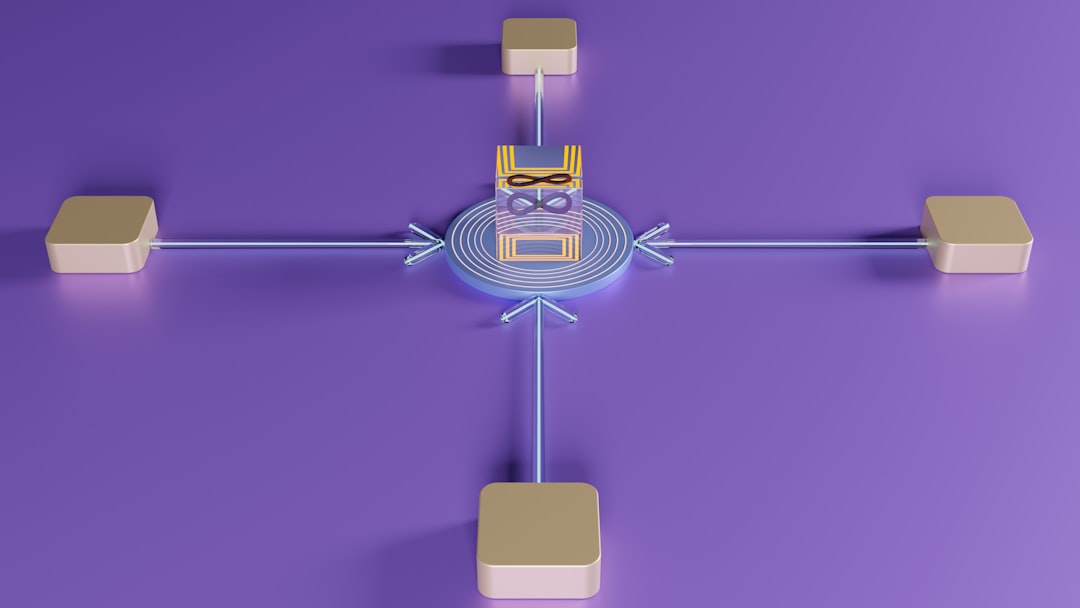
At the heart of most service mesh implementations is the sidecar proxy model. Each microservice runs alongside a lightweight proxy that intercepts all inbound and outbound traffic. Instead of services communicating directly, they route traffic through these proxies.
This architecture enables several advanced capabilities:
- Traffic management: Fine-grained control over routing, load balancing, and failover.
- Security enforcement: Mutual TLS (mTLS) encryption between services.
- Observability: Detailed metrics, logs, and distributed tracing.
- Resilience features: Retries, circuit breaking, and timeouts.
Most service meshes integrate tightly with Kubernetes, which has become the de facto standard for container orchestration in microservices environments.
Key Benefits of Using a Service Mesh
1. Advanced Traffic Control
Service meshes allow developers to define sophisticated traffic policies without touching application code. For example:
- Canary deployments
- A/B testing
- Gradual rollouts
- Traffic mirroring for testing
These capabilities are crucial for modern DevOps practices and continuous delivery pipelines.
2. Zero-Trust Security
Security is a growing concern in distributed systems. Service meshes enforce mutual TLS encryption automatically between services, ensuring that communication is authenticated and encrypted by default. This supports zero-trust networking principles.
3. Deep Observability
Visibility into service communication is critical. A service mesh collects:
- Latency metrics
- Error rates
- Traffic distribution data
- Request tracing information
This level of insight helps teams detect bottlenecks and troubleshoot failures faster than traditional logging approaches.
4. Improved Reliability
By incorporating circuit breakers, rate limiting, and automated retries, service meshes help prevent cascading failures. If one service begins to fail, the mesh can isolate it and redirect traffic appropriately.

Popular Service Mesh Platforms
While many service mesh tools exist, a few major players dominate the cloud-native ecosystem. Here’s a closer look at the most widely used options.
1. Istio
Istio is one of the most feature-rich service mesh platforms available. Built initially in partnership between Google, IBM, and Lyft, it offers comprehensive traffic management, security, and observability capabilities.
Strengths:
- Powerful traffic routing rules
- Built-in security policies
- Strong Kubernetes integration
- Large community support
Considerations:
- Can be complex to configure
- Higher operational overhead in large clusters
2. Linkerd
Linkerd focuses on simplicity and performance. It is lightweight compared to Istio and emphasizes ease of use.
Strengths:
- Simple installation and configuration
- Low resource consumption
- Fast performance
Considerations:
- Fewer advanced customization features compared to Istio
3. Consul Connect
Consul Connect, developed by HashiCorp, extends the Consul service discovery ecosystem to include service mesh capabilities.
Strengths:
- Works across Kubernetes and non-Kubernetes environments
- Strong service discovery capabilities
- Flexible deployment models
Considerations:
- May require additional integration effort in complex environments
4. Kuma
Kuma is a modern service mesh platform built on Envoy. It supports multi-zone and multi-cluster deployments with relatively simple management.
Strengths:
- Multi-mesh and multi-zone support
- Kubernetes and VM compatibility
- Clean control plane design
Considerations:
- Smaller community compared to Istio
Service Mesh Comparison Chart
| Feature | Istio | Linkerd | Consul Connect | Kuma |
|---|---|---|---|---|
| Ease of Setup | Moderate to Complex | Simple | Moderate | Moderate |
| Traffic Management | Advanced | Core Features | Good | Advanced |
| Security (mTLS) | Yes | Yes | Yes | Yes |
| Kubernetes Native | Yes | Yes | Yes | Yes |
| Best For | Large, complex systems | Performance-focused teams | Hybrid environments | Multi-cluster deployments |
What to Consider When Choosing a Service Mesh
Selecting the right platform depends on several factors:
Operational Complexity
If your team lacks deep Kubernetes expertise, a simpler solution like Linkerd may be more appropriate than a fully featured but complex platform like Istio.
Scale Requirements
For massive, enterprise-grade deployments with intricate routing needs, Istio often provides the necessary granularity.
Hybrid and Multi-Cloud Needs
If your services span virtual machines, bare metal servers, and multiple cloud providers, Consul Connect or Kuma may offer greater flexibility.
Performance Sensitivity
Every proxy adds some overhead. In ultra-low latency environments, lightweight service meshes with optimized proxies can make a measurable difference.
Common Use Cases
Service meshes are not just about technical elegance—they solve real-world problems:
- Gradual feature rollouts without impacting full user bases
- Secure internal APIs in regulated industries
- Monitoring SLAs for high-availability platforms
- Managing cross-region traffic in global deployments
- Enforcing consistent security policies across teams
In industries such as finance, healthcare, and large-scale e-commerce, the reliability and security benefits alone justify implementing a service mesh.
The Future of Service Mesh Technology
The evolution of cloud-native computing continues to shape service mesh development. Newer trends include:
- Ambient mesh architectures that reduce sidecar overhead
- Better multi-cluster federation
- Integration with serverless platforms
- Improved policy automation using AI-based insights
As organizations scale, the need for robust traffic management solutions will only grow. Service meshes are increasingly becoming a standard layer in modern infrastructure stacks.
Final Thoughts
Managing microservices traffic effectively requires more than simple load balancing. It demands deep visibility, strong security, intelligent routing, and built-in resilience. Service mesh platforms provide these capabilities in a structured, scalable way.
Whether you choose Istio for its advanced control, Linkerd for its simplicity, Consul for hybrid flexibility, or Kuma for multi-zone management, the key takeaway is clear: a service mesh transforms chaotic service communication into a controllable, observable, and secure system.
As microservices architectures continue to dominate modern application development, service mesh platforms are no longer optional luxuries—they are becoming essential components of a mature, scalable cloud-native strategy.