In San Francisco’s Financial District, 420 Montgomery Street stands as one of the city’s most recognizable banking addresses. The building is strongly associated with Wells Fargo, a company whose origins are tied to the Gold Rush, early express services, and the rapid rise of California finance. While the structure itself belongs to the modern era of downtown office development, the address carries a much older story shaped by commerce, transportation, banking, and the evolution of Montgomery Street into the “Wall Street of the West.”
TLDR: 420 Montgomery Street is best known as the longtime corporate headquarters address of Wells Fargo in San Francisco. Its importance comes less from architectural ornament and more from its connection to California banking, Gold Rush commerce, and the development of Montgomery Street as a financial center. Notable occupants have included Wells Fargo corporate offices, banking services, and the Wells Fargo History Museum. The site remains a symbolic address in the history of American finance.
A Landmark Address in the Financial District
Montgomery Street has been central to San Francisco’s commercial life since the nineteenth century. During the Gold Rush, the area around Montgomery, California, and Sacramento streets became crowded with banks, shipping agents, brokers, merchants, and lawyers who served a city growing at extraordinary speed. As San Francisco matured from a port settlement into the financial capital of the Pacific Coast, Montgomery Street developed an identity as the place where major money decisions were made.
Within that setting, 420 Montgomery Street became especially important because of its association with Wells Fargo. The building is not a Gold Rush relic in the literal sense, but it occupies a historical landscape where early financial institutions helped turn San Francisco into a gateway for western expansion. The address represents a bridge between the city’s rough-and-ready commercial beginnings and its later role as a headquarters city for major companies.
The Montgomery Street Context
To understand the significance of 420 Montgomery Street, it is important to understand Montgomery Street itself. In the 1850s, San Francisco’s waterfront was much closer to Montgomery than it is today. Landfill projects gradually pushed the shoreline eastward, but in the Gold Rush years the street stood near the center of maritime trade, auctions, banking, and express offices. Companies operating there served miners, merchants, and travelers moving between California, the eastern United States, Mexico, and the Pacific world.
By the late nineteenth and early twentieth centuries, Montgomery Street had become a dense corridor of financial institutions. Banks, insurance companies, mining firms, and stockbrokers clustered there, giving the district a reputation for seriousness and influence. Many of the city’s great commercial buildings rose in the surrounding blocks, including office towers, bank halls, and exchange buildings. In that environment, an address on Montgomery Street conveyed credibility.
Wells Fargo and the Origins of the Address’s Fame
The name most closely tied to 420 Montgomery Street is Wells Fargo. The company was founded in 1852 by Henry Wells and William G. Fargo, who were already associated with express and banking operations in the eastern United States. Their California enterprise was designed to serve the needs of a booming Gold Rush economy. It handled shipments of gold, letters, packages, and funds at a time when speed and trust were essential.
Wells Fargo became famous for its stagecoach routes, express agents, and banking services. In popular memory, the company is often linked with red-and-gold stagecoaches crossing difficult terrain, but its role was broader than transportation. It helped move money, documents, and goods across long distances before modern communications and banking networks existed. The company’s reputation rested on reliability in an era when theft, fire, weather, and rough roads could disrupt commerce without warning.
As San Francisco changed, Wells Fargo changed with it. The company evolved from a frontier express business into a major financial institution. Its headquarters presence at 420 Montgomery Street reflects that transformation. The address became a corporate anchor, tying the modern bank to its nineteenth-century California origins.
The Building and Its Civic Role
The present-day building at 420 Montgomery Street is commonly known as the Wells Fargo headquarters building. It is part of a downtown landscape shaped by mid-twentieth-century and late-twentieth-century office construction, when banks and corporations sought efficient, modern headquarters in the Financial District. Unlike the ornate banking halls of earlier decades, modern office buildings often emphasized clean lines, corporate identity, and functional interior space.
Although the building’s exterior may appear restrained compared with older landmarks nearby, its importance lies in use, memory, and institutional presence. Thousands of employees, customers, tourists, historians, and business visitors have passed through or near the address. The building has served not only as an office location but also as a symbol of California banking history.
For many years, the address was also associated with public history through museum exhibits connected to Wells Fargo’s past. These displays helped interpret the company’s stagecoach heritage, express business, gold shipments, and banking development. In this way, the building was both a working financial center and a place where the public could encounter a curated version of the American West’s commercial history.
Notable Tenant: Wells Fargo Corporate Offices
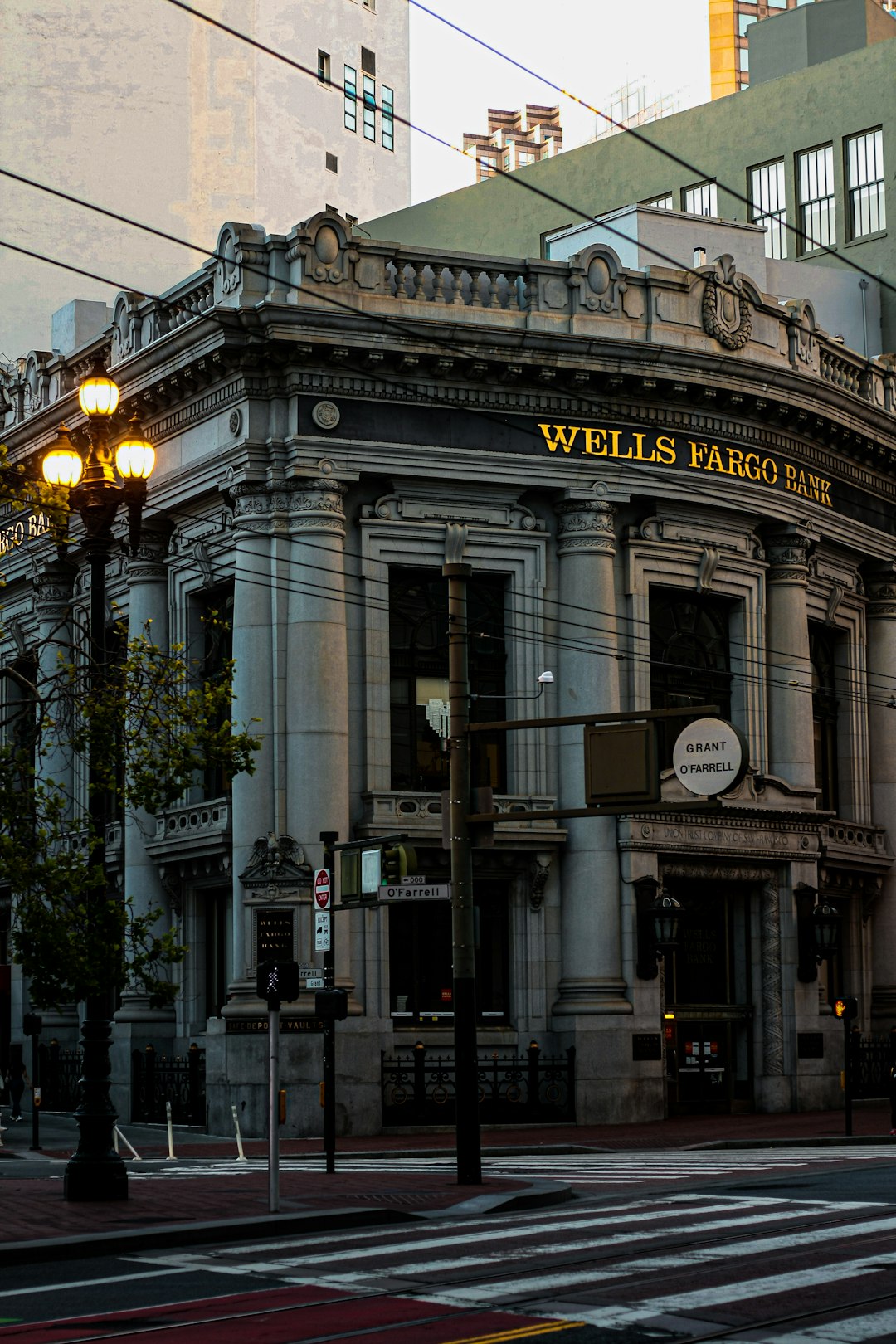
The most notable tenant and occupant of 420 Montgomery Street has been Wells Fargo & Company and its related banking operations. As a headquarters address, the building has been associated with executive offices, administrative departments, corporate communications, legal functions, and financial services. The address appears in corporate references, banking documents, and public records as a central location for the institution.
Wells Fargo’s presence at 420 Montgomery Street gave the building national visibility. The company grew into one of the largest banking institutions in the United States, extending far beyond California while continuing to maintain a strong San Francisco identity. Even as modern banking became digital and geographically dispersed, the Montgomery Street address retained symbolic value because it linked the company to the city where its California story began.
The corporate offices also reflected the changing character of American banking. What began as a service for miners and merchants became a complex organization dealing with consumer banking, commercial lending, wealth management, mortgages, investment services, and national financial operations. The history of the tenant, therefore, mirrors the larger history of finance in the United States.
Notable Tenant: Wells Fargo Banking Services
Another important use of 420 Montgomery Street has been as a center for banking services. Major headquarters buildings often include or support customer-facing bank operations, private banking offices, branch services, or specialized financial departments. At an address so closely connected to the Wells Fargo name, the presence of these services reinforced the building’s identity as more than a standard office tower.
For customers and business clients, visiting the address could carry a sense of institutional weight. The location placed banking activity in the heart of San Francisco’s traditional financial district, close to law firms, investment offices, corporate headquarters, and historic banks. Such proximity mattered, especially in earlier decades when in-person meetings and paper transactions were central to finance.
The banking services associated with the address also show how downtown San Francisco functioned as a daily workplace. The Financial District was not only a skyline of prestige buildings; it was a dense network of clerks, tellers, executives, messengers, attorneys, accountants, and customers. 420 Montgomery Street belonged to that working ecosystem.
Notable Tenant: Wells Fargo History Museum
One of the most memorable public-facing occupants associated with the address was the Wells Fargo History Museum. The museum presented artifacts and stories connected to the company’s past, especially its nineteenth-century express and stagecoach operations. Exhibits commonly highlighted gold shipments, historic documents, mining-era commerce, and the famous stagecoach imagery that became central to the Wells Fargo brand.
The museum gave visitors a way to connect the modern Financial District with the dramatic events of California’s early statehood. It helped explain how banking, transportation, and communication were intertwined in the West. For tourists, school groups, and local residents, such exhibits transformed a corporate address into a small historical destination.
Its presence also illustrated how corporations use history to shape public identity. Wells Fargo’s stagecoach past became a powerful symbol of endurance, speed, and trust. At 420 Montgomery Street, that imagery was not merely decorative; it linked the building to a broader narrative about San Francisco’s role in western expansion and financial development.
Architecture, Image, and Corporate Identity
The building at 420 Montgomery Street should be understood as part of a broader tradition of corporate architecture. Financial institutions often use buildings to communicate permanence. In earlier eras, banks favored marble, columns, bronze doors, and grand banking halls. Modern headquarters buildings often communicated similar ideas through scale, location, efficient design, and prominent signage.
At 420 Montgomery Street, the power of the address comes from a combination of place and name recognition. The building stands in a district filled with older landmarks and major corporate addresses, but its Wells Fargo association gives it a particular identity. The company’s name, stagecoach logo, and long San Francisco history make the site more recognizable than many neighboring office buildings.
Image not found in postmetaWhy 420 Montgomery Street Matters
420 Montgomery Street matters because it represents continuity in a city known for reinvention. San Francisco has survived fires, earthquakes, economic booms, recessions, population shifts, and technological changes. Through many of those transformations, the Financial District remained a center of capital and decision-making. The address stands within that long-running pattern.
It also matters because of the way it connects local and national history. Wells Fargo began with services tailored to the needs of Gold Rush California, but it grew into a national banking name. The address therefore reflects both San Francisco’s regional importance and its influence on American finance more broadly.
Finally, 420 Montgomery Street is notable as a place where corporate memory and city history overlap. It is not simply a building with tenants; it is an address layered with stories about commerce, migration, risk, transportation, banking, and branding. Its notable occupants have made it a symbol of how San Francisco’s frontier economy became part of a modern financial system.
Frequently Asked Questions
-
Where is 420 Montgomery Street located?
420 Montgomery Street is located in San Francisco’s Financial District, an area long associated with banking, law, insurance, investment, and corporate offices. -
What is 420 Montgomery Street best known for?
It is best known as a major Wells Fargo address and as a symbol of the company’s long connection to San Francisco and California banking history. -
Was Wells Fargo founded at 420 Montgomery Street?
Wells Fargo was founded in 1852, and its early history is closely tied to San Francisco’s Gold Rush financial district. The modern building at 420 Montgomery Street is not the original 1852 office, but the address is strongly connected with the company’s later headquarters identity. -
Who were the notable tenants at 420 Montgomery Street?
The most notable occupants have included Wells Fargo corporate offices, Wells Fargo banking services, and the Wells Fargo History Museum. -
Why is Montgomery Street historically important?
Montgomery Street became the heart of San Francisco’s financial district during and after the Gold Rush. It attracted banks, brokers, merchants, and professional firms, earning a reputation as the “Wall Street of the West.” -
Is 420 Montgomery Street important architecturally?
Its main importance is historical and institutional rather than purely architectural. The building is significant because of its association with Wells Fargo and its location within San Francisco’s historic financial core.