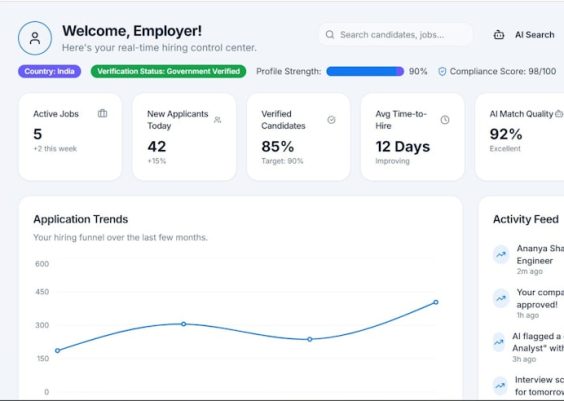
Delken AI is best understood as a modern artificial intelligence platform aimed at helping users improve productivity, automate repetitive work, and generate useful outputs from natural language prompts. This review takes a serious, practical look at its likely value for professionals, teams, and businesses evaluating AI tools for everyday operations. Rather than treating Delken AI as a novelty, the focus here is on capabilities, usability, reliability, limitations, and business fit.
TLDR: Delken AI appears to be positioned as a productivity-focused AI solution for content generation, workflow support, research assistance, and automation. Its core value depends on how well it combines ease of use with accurate, context-aware outputs. For individuals and teams, it may be useful if supported by strong data handling, transparent pricing, and dependable integrations. As with any AI platform, users should test it carefully before relying on it for high-stakes decisions.
Overview of Delken AI
Delken AI belongs to a growing category of AI tools designed to make advanced machine intelligence accessible to non-technical users. Platforms in this space usually provide a conversational interface, prompt-based generation, document assistance, summarization, idea development, and task automation. The appeal is straightforward: users can describe what they need in plain language and receive structured, usable results within seconds.
The serious question is not whether Delken AI can produce impressive results on a first trial. Many AI systems can. The more important question is whether it can deliver consistent, accurate, secure, and repeatable value across real business tasks. A trustworthy review must therefore examine how Delken AI performs across practical scenarios, not just polished demonstrations.

Core Capabilities
While the exact feature set may vary depending on the version, subscription tier, or deployment model, Delken AI can be evaluated across several common capability areas that define most serious AI productivity platforms.
- Text generation: Creating drafts for articles, emails, reports, proposals, product descriptions, and internal documentation.
- Summarization: Condensing long documents, meeting notes, research materials, or customer communications into clear summaries.
- Question answering: Responding to user prompts with explanations, recommendations, or structured information.
- Workflow assistance: Helping users organize tasks, plan projects, create checklists, and standardize repeatable work.
- Brainstorming: Supporting ideation for marketing, product development, strategic planning, and training materials.
- Document refinement: Improving tone, grammar, clarity, format, and professionalism in written content.
These capabilities are valuable because they address common workplace friction. Many professionals spend a significant amount of time drafting, rewriting, organizing, and interpreting information. If Delken AI reduces that effort without lowering quality, it can become a legitimate productivity asset.
User Experience and Ease of Adoption
For an AI platform to be useful, it must be easy to adopt. A technically powerful system that requires extensive configuration may fail in everyday use, especially among teams without dedicated AI specialists. Delken AI’s effectiveness will depend heavily on its interface, prompt design support, onboarding resources, and how clearly it guides users toward better results.
A strong AI interface should make it easy to enter prompts, review outputs, modify responses, and reuse successful workflows. It should also support different user skill levels. Beginners may need templates and examples, while advanced users may want more control over tone, structure, formatting, data sources, or automation rules.
The best AI tools do not simply answer questions; they help users ask better questions. If Delken AI includes prompt suggestions, guided workflows, saved instructions, or role-based templates, those features can significantly improve adoption and output quality.
Business Use Cases
Delken AI may be particularly useful in business environments where teams repeatedly create, interpret, or transform written information. Its value increases when it is applied to specific operational needs rather than used casually.
Marketing and Content
Marketing teams can use Delken AI to generate campaign ideas, draft social media posts, outline blog articles, refine messaging, and adapt content for different audiences. However, AI-generated marketing material should always be reviewed for brand consistency, factual accuracy, and originality.
Customer Support
Support teams may benefit from AI-assisted response drafting, ticket summarization, knowledge base article creation, and tone adjustment. In this context, speed matters, but so does accuracy. A poorly reviewed AI response can create confusion or damage customer trust.
Operations and Administration
Administrative teams can use Delken AI to create meeting summaries, draft policies, prepare internal announcements, organize procedures, and turn rough notes into formal documents. These use cases are often lower risk and can deliver immediate time savings.
Sales and Business Development
Sales teams may use the platform to draft outreach messages, summarize prospect information, prepare call scripts, and customize follow-up emails. The strongest results usually come when AI-generated drafts are combined with human judgment and real customer context.

Accuracy and Reliability
Accuracy is one of the most important areas in any AI review. AI systems can generate confident answers that sound correct even when they are incomplete or inaccurate. This is commonly referred to as hallucination, and it remains a known limitation across many generative AI technologies.
For Delken AI to be dependable, users should evaluate how it handles facts, calculations, citations, specialized terminology, and ambiguous prompts. In areas such as legal, medical, financial, technical, or compliance-related work, human review is essential. AI can assist with structure and analysis, but it should not be treated as an unquestioned authority.
A serious implementation should include basic rules:
- Verify factual claims before publishing or acting on them.
- Use source materials when asking the AI to summarize or analyze specific information.
- Avoid vague prompts for important tasks; provide context, constraints, and desired format.
- Review outputs for tone, bias, omissions, and practical applicability.
- Document approved workflows so teams can reproduce reliable results.
Security and Data Privacy Considerations
Any organization considering Delken AI should examine data privacy and security before uploading sensitive information. AI platforms may process user inputs through cloud systems, and the handling of that data can vary depending on terms of service, enterprise controls, retention policies, and configuration settings.
Important questions include whether Delken AI stores prompts, whether data is used for model training, whether enterprise users can disable retention, and whether the platform supports access controls. Businesses should also ask about encryption, audit logs, compliance standards, and user permission management.
For sensitive industries, security is not a secondary feature; it is a requirement. Companies should avoid entering confidential customer records, trade secrets, unreleased financial information, or regulated personal data unless they have confirmed that the platform provides appropriate legal and technical protections.
Strengths of Delken AI
Based on its apparent positioning as an AI productivity tool, Delken AI’s strengths likely come from the same areas that make modern AI platforms attractive to professionals: speed, flexibility, and accessibility. Users can move from an idea to a structured draft quickly, and teams can reduce time spent on repetitive writing or formatting tasks.
- Efficiency: It can shorten the time required to produce first drafts, summaries, outlines, and routine communications.
- Versatility: A single AI assistant can support marketing, administration, sales, training, and research tasks.
- Low barrier to entry: Natural language prompts make the tool accessible to users without programming experience.
- Scalability: Teams can standardize templates and workflows to create more consistent outputs.
- Creative support: It can help overcome blank-page problems by suggesting angles, structures, and alternatives.
These strengths are meaningful when Delken AI is used as an assistant rather than a complete replacement for human decision-making. Its best role is to accelerate work, not eliminate accountability.
Limitations and Risks
No serious Delken AI review would be complete without noting the limitations. Generative AI can be highly useful, but it is not perfect. Users should be cautious about overreliance, especially when outputs require factual precision, legal interpretation, emotional sensitivity, or strategic judgment.
Potential limitations include:
- Inconsistent quality: Output may vary based on prompt quality and task complexity.
- Factual errors: The system may produce inaccurate or outdated information if not grounded in verified sources.
- Generic writing: AI-generated content can sometimes feel polished but bland without human editing.
- Privacy concerns: Sensitive data should not be entered without clear security assurances.
- Workflow dependency: Teams may become dependent on AI outputs without developing proper review standards.

How to Evaluate Delken AI Before Committing
Before adopting Delken AI across a team or organization, decision-makers should run a structured evaluation. A casual trial may show whether the tool is impressive, but a structured test shows whether it is dependable.
Start by selecting five to ten real tasks that represent normal work. These might include drafting an email campaign, summarizing a policy document, creating a project plan, rewriting customer support replies, or generating a report outline. Then compare Delken AI’s output against the work of a skilled employee. The goal is not necessarily to outperform the employee, but to determine whether the tool saves time while maintaining acceptable quality.
Businesses should also test how Delken AI responds to complex instructions, company-specific terminology, and corrections. A useful platform should allow users to refine outputs easily. If every result requires heavy rewriting, the productivity gain may be smaller than expected.
Best Practices for Using Delken AI
To get better results from Delken AI, users should treat prompting as a professional skill. Clear instructions generally produce better outputs than short, vague requests. A strong prompt should include the goal, audience, tone, format, constraints, and source material when relevant.
For example, instead of asking, “Write a report,” a better prompt would specify the report’s purpose, length, audience, key points, preferred structure, and any facts that must be included. This reduces ambiguity and makes the final output more useful.
Recommended practices include:
- Provide clear context and define the desired outcome.
- Ask for structured outputs such as tables, bullet points, or sections.
- Request multiple versions when comparing tone or strategy.
- Use human review for accuracy, ethics, and brand alignment.
- Create reusable prompts for recurring tasks.
Who Is Delken AI Best For?
Delken AI is likely best suited for professionals and teams that handle significant amounts of written communication or structured knowledge work. This includes marketers, consultants, founders, educators, support teams, operations managers, and small businesses looking to improve productivity without hiring additional staff for every task.
It may be less suitable for users who expect fully autonomous decision-making, guaranteed factual accuracy, or specialized expert judgment without review. AI tools are most effective when paired with knowledgeable users who can evaluate and refine the output.
Final Verdict
Delken AI has the potential to be a valuable productivity platform if it delivers reliable text generation, useful workflow assistance, strong usability, and responsible data handling. Its capabilities appear aligned with the needs of modern professionals who want to reduce repetitive work and improve the speed of content creation, planning, and communication.
However, the value of Delken AI should be measured through practical testing, not assumptions. Organizations should evaluate accuracy, security, pricing, integrations, and support before making it part of critical workflows. Used carefully, Delken AI can be a serious assistant for improving productivity. Used carelessly, it can introduce errors, generic content, or privacy risks.
Overall, Delken AI is worth considering for users who understand both the promise and the limits of artificial intelligence. Its greatest benefit is not replacing human expertise, but helping capable people work faster, think more clearly, and produce better first drafts with less friction.